
 Mon – Fri 7:00 AM – 4:00 PM
 + 48 (52) 386 03 48


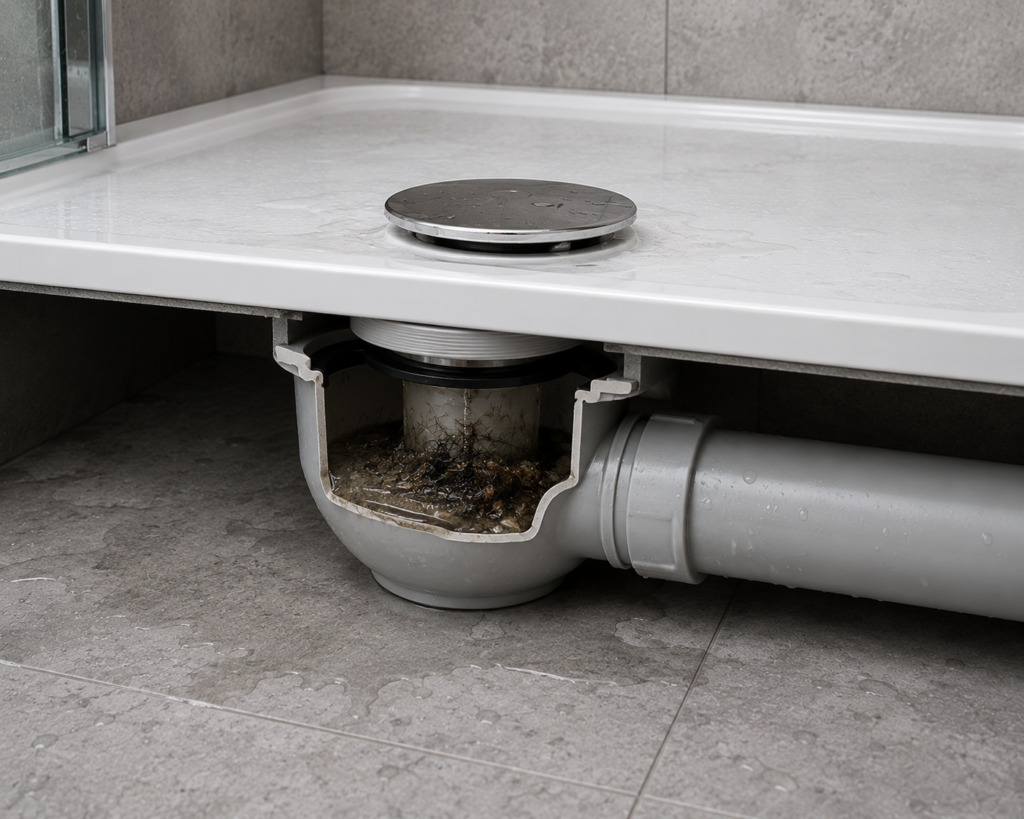
A clogged shower drain is one of the most common issues homeowners face. Water starts draining more slowly, unpleasant odors appear, and many people’s first instinct is to reach for a powerful chemical drain cleaner. In most cases, however, these products are unnecessary. A much safer—and often equally effective—solution is to clear the shower trap mechanically using a standard plunger or a pressure plunger.
Why Avoid Chemical Drain Cleaners?
Chemical drain cleaners contain highly corrosive substances designed to dissolve organic blockages. While they can be effective, they also have several disadvantages:
- They may damage seals and plumbing components if used frequently.
- They can be hazardous to your skin and eyes.
- They have a negative impact on the environment.
- They often address only the symptoms by partially dissolving the blockage rather than removing its cause.
If the blockage is caused by hair, soap residue, or cosmetic deposits, physically removing the obstruction is a much better solution.
What Causes a Shower Trap to Clog?
During everyday use, the shower drain collects:
- Hair
- Soap residue
- Cosmetic products
- Small debris
Over time, these materials accumulate inside the trap, restricting water flow. One of the first warning signs is that water drains more slowly than usual. This is the ideal time to act—before the drain becomes completely blocked.
A Plunger – The Simplest Way to Clear a Shower Drain
A traditional rubber plunger is one of the most effective tools for removing minor blockages.
To use it correctly:
- Pour a small amount of water into the shower tray so that the rubber cup of the plunger is submerged.
- Place the plunger firmly over the drain, creating a tight seal.
- Pump the handle vigorously several times using up-and-down motions.
- Check whether the water begins to drain freely.
The pressure created by the plunger is often enough to dislodge accumulated debris and restore normal drainage.
Even More Effective: A Pressure Plunger
For more stubborn clogs, a pressure plunger (also known as an air-powered plunger) is an excellent option.
Unlike a standard plunger, it generates much higher pressure, allowing it to remove tougher blockages without the need for aggressive chemicals.
This solution is especially recommended for households with multiple occupants, where hair buildup is a recurring problem.
How to Prevent a Shower Drain from Clogging
Prevention is the best way to avoid drainage problems.
Follow these simple maintenance tips:
- Remove hair from the drain regularly.
- Clean the shower trap every few weeks.
- Use a drain strainer to catch larger debris.
- Take action as soon as you notice water draining more slowly.
These simple habits will help extend the life of your plumbing system and significantly reduce the risk of costly repairs.