
 Mon – Fri 7:00 AM – 4:00 PM
 + 48 (52) 386 03 48


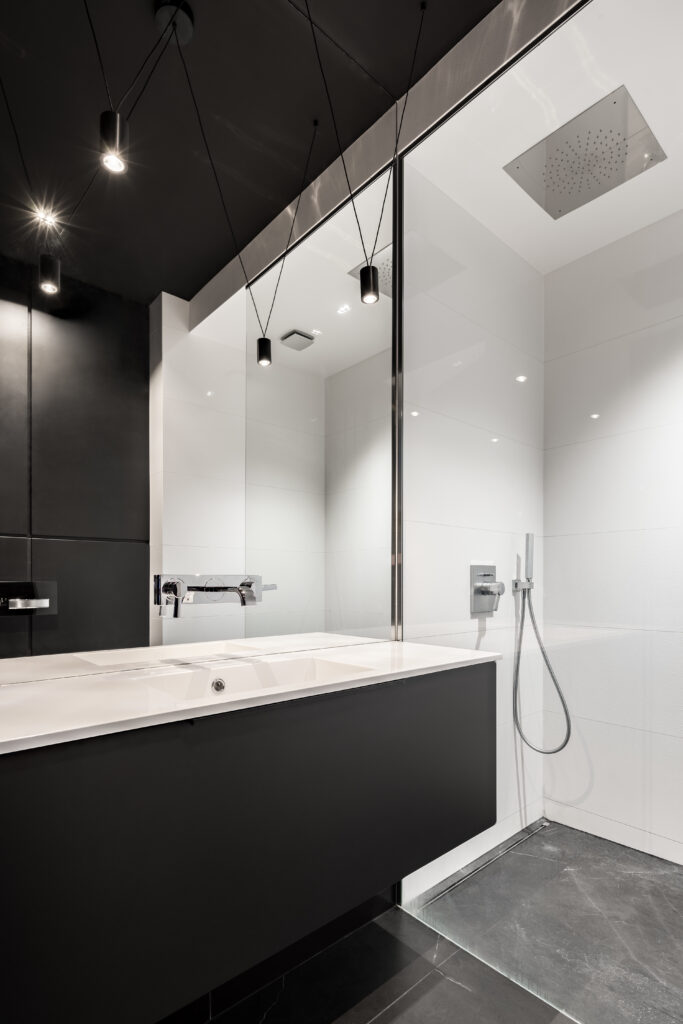
Linear drainage is an elegant solution for a modern bathroom. Check how to avoid mistakes during installation and how to choose the right model for your needs.
A modern barrier-free bathroom — functionality and aesthetics in one
Linear drains have gained enormous popularity thanks to their sleek appearance and ease of use. They make cleaning easier, visually enlarge the space, and help create a spa-like bathroom. However, even the best product will not ensure effective water drainage if it is poorly selected or installed.
Below are the 7 most common mistakes made when installing linear drains—and how to avoid them.
1. Insufficient or incorrect floor slope
This is the most common issue in bathrooms with walk-in showers.
To allow water to flow freely into the drain, the floor should have a slope of at least 2% toward the outlet.
Lack of proper inclination leads to water pooling, stains, and grout damage.
👉 Tip: Check the slope before pouring the screed—fixing it later is very costly.
2. Lack of proper waterproofing
Waterproofing in the shower area is essential.
Sealing only the connection between tiles and the drain is not enough—sealing tapes and collars should be applied around the entire channel.
This prevents water from seeping under the tiles and causing moisture damage.
3. Incorrect material selection
Linear drains are available in plastic and stainless steel.
If durability and aesthetics matter, choose stainless steel of grade AISI 304 or 316, which is resistant to corrosion and chemicals.
Steel solutions work well in residential bathrooms, hotels, and public facilities.
4. Insufficient system capacity
Modern showers, especially rain showers, can generate up to 15–20 liters of water per minute.
The drainage channel should have adequate capacity—at least 0.8 l/s.
An undersized drain can cause water backup and flooding.
👉 Tip: Check the flow rate in the manufacturer’s specifications before purchasing.
5. No access for cleaning
Every drainage system should allow easy removal of the grate and access to the interior.
This is important not only for aesthetics but also for hygiene—regular cleaning prevents unpleasant odors and buildup.
Choose models with a removable trap and cover.
6. Mismatch between drain and room type
The choice of drainage system depends on the bathroom’s purpose.
In residential settings, compact models with an aesthetic grate are sufficient.
In public facilities, spas, or hospitals, more robust industrial systems with higher durability and capacity are recommended.
Always match the solution to the intensity of use.
7. Skipping the leak test after installation
After installation, perform a leak test by filling the shower area with water.
This allows you to verify that the drain works properly and that there are no leaks.
It’s a simple step that can prevent costly floor demolition later.
How to avoid installation problems
✅ Use complete drainage systems from a single manufacturer.
✅Ensure proper substrate preparation and waterproofing.
✅Do not skip leak testing before tiling.
✅ If you lack experience, hire professionals.
A properly selected and installed linear drain is a long-term investment.
It ensures comfort, safety, and an aesthetically pleasing bathroom.
By avoiding these mistakes, you can save time, money, and unnecessary stress—while achieving a result that is both functional and elegant.
We encourage you to explore the linear drainage systems available in the Akces product range.